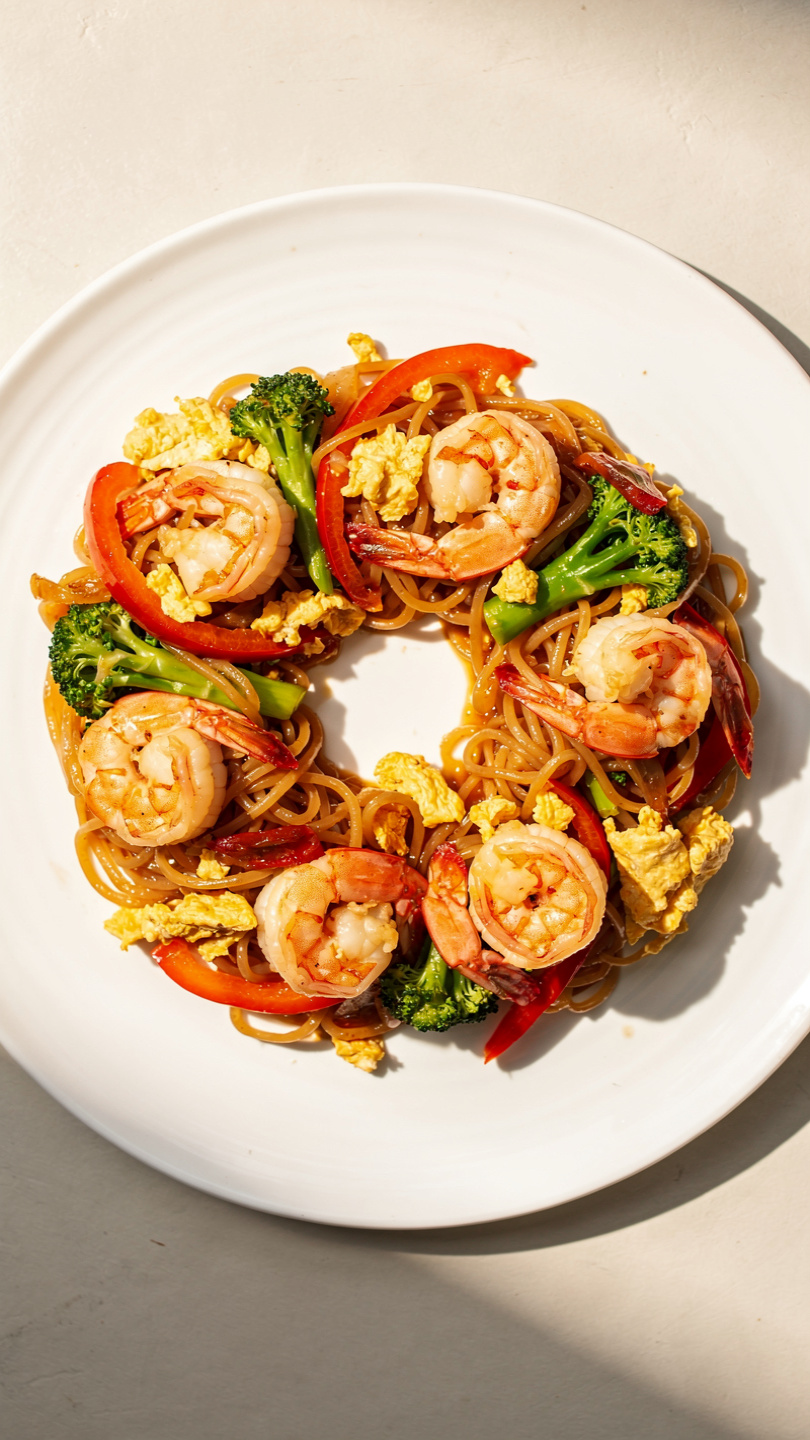
Shrimp Stir Fry with Rice Noodles
This easy shrimp stir fry with rice noodles comes together in under 30 minutes with a savory, garlicky sauce and crisp vegetables. A naturally gluten-free rice noodle recipe the whole family will love.

The Weeknight Stir Fry That Actually Delivers
Some recipes promise quick and easy but quietly demand 45 minutes of your evening. This shrimp stir fry with rice noodles is genuinely not one of them. From the moment you start soaking your noodles to the moment you set a steaming bowl on the table, you are looking at right around 30 minutes. It is fast, it is deeply satisfying, and thanks to rice noodles and tamari, the whole dish is naturally gluten-free without any awkward substitutions or compromise on flavor.
This is the kind of recipe that earns a permanent spot in your weeknight rotation because it works on every level. The noodles are silky and slurp-worthy. The shrimp are perfectly pink and just barely sweet. The vegetables stay crisp and bright. And that sauce, a savory, garlicky mix of tamari, oyster sauce, a touch of honey, and rice vinegar, ties absolutely everything together.
Why This Gluten-Free Rice Noodle Stir Fry Works So Well
A great easy rice noodle stir fry comes down to a few key principles, and once you understand them, this dish becomes nearly foolproof.
High heat is non-negotiable. Stir frying is one of the oldest and most efficient cooking techniques for a reason. A ripping-hot wok cooks proteins and vegetables in minutes while keeping everything tender-crisp rather than soggy and limp. If you only take one thing from this post, let it be this: get your pan very hot before anything goes in.
Dry shrimp sear, wet shrimp steam. Pat your shrimp completely dry before they hit the oil. Moisture is the enemy of a good sear. A quick 30 seconds per side over screaming heat gives you that slightly golden exterior that makes every bite more interesting.
Noodles go in underdone. Rice noodles only need a quick soak to become pliable, not a full boil. They finish cooking in the wok with the sauce, which means they absorb all that flavor instead of just being coated in it.
Chef's Tip: Do all your chopping, mixing, and soaking before you turn on the heat. Stir frying moves fast, and there is no time to grab something from across the kitchen once the wok is hot.
Choosing the Right Tools and Ingredients
For gluten-free rice noodle recipes, ingredient sourcing genuinely matters. A good tamari rather than regular soy sauce keeps things safe and also adds a slightly richer, less sharp flavor. Look for medium-width rice noodles, sometimes labeled "rice stick noodles," which hold up beautifully to tossing in a hot wok without falling apart.
As for equipment, a large carbon steel wok is the gold standard for any stir fry with rice noodles, but a wide stainless steel or cast iron skillet will do the job if that is what you have. The key is surface area and the ability to hold high heat evenly.
Building the Sauce From Scratch
The sauce is where this recipe earns its place among the best Asian rice noodle recipes. It is a quick four-ingredient situation that comes together in a small bowl in about 60 seconds.
- Tamari brings the salty, savory backbone
- Oyster sauce (use a gluten-free version if needed) adds body and a subtle sweetness
- Rice vinegar lifts everything with a gentle brightness
- Honey rounds out the edges without making the dish taste sweet
- Cornstarch slurry thickens the sauce just enough to cling to every strand of noodle
Mix it all together before anything hits the pan, because once you start cooking, you will be moving too quickly to measure anything.
What Vegetables Work Best
This stir fry rice noodle recipe is wonderfully flexible when it comes to produce. The version here uses red bell pepper, snap peas, and shredded carrots, a combination that brings color, crunch, and a natural sweetness that balances the savory sauce.
That said, you can easily riff on this based on what you have in your fridge:
- Broccoli florets work beautifully and soak up sauce like champions
- Baby bok choy adds a slightly bitter, leafy note that is very classic in Asian rice noodle stir fry dishes
- Shiitake mushrooms bring an earthy depth
- Edamame adds protein and a satisfying bite if you want to stretch the dish further
Just make sure whatever vegetables you use are cut to roughly the same size so everything cooks at the same rate.
Chef's Tip: Add vegetables in order of density. Harder vegetables like carrots and bell pepper go in first. Softer ones like bok choy and snap peas follow 60 to 90 seconds later. This keeps everything from turning to mush.
Ready to Cook? Here Is the Full Recipe
All your mise en place is set, your sauce is mixed, and your wok is waiting. Let's bring this easy rice noodle stir fry together.
Shrimp Stir Fry with Rice Noodles
This easy shrimp stir fry with rice noodles comes together in under 30 minutes with a savory, garlicky sauce and crisp vegetables. A naturally gluten-free rice noodle recipe the whole family will love.
Ingredients
- 8 oz rice noodles, medium width, soaked according to package directions
- 1 lb large shrimp, peeled, deveined, tails removed
- 2 tbsp sesame oil, divided
- 1 tbsp vegetable oil
- 4 garlic cloves, minced
- 1 tbsp fresh ginger, grated
- 1 red bell pepper, thinly sliced
- 1 1/2 cups snap peas, trimmed
- 1 cup shredded carrots
- 3 green onions, sliced, whites and greens separated
- 3 tbsp tamari or gluten-free soy sauce, use tamari to keep gluten-free
- 2 tbsp oyster sauce, use gluten-free oyster sauce if needed
- 1 tbsp rice vinegar
- 1 tbsp honey
- 1 tsp cornstarch, mixed with 1 tbsp cold water to make a slurry
- 1/2 tsp red pepper flakes, optional, for heat
- 1 tbsp sesame seeds, for garnish
- 1/4 cup fresh cilantro, roughly chopped, for garnish
- 1 lime, cut into wedges for serving
Instruction
Soak the rice noodles in warm water for 10 to 12 minutes or according to package directions until just pliable but not fully soft. Drain and set aside. They will finish cooking in the wok.
In a small bowl, whisk together the tamari, oyster sauce, rice vinegar, honey, and cornstarch slurry. Set the sauce aside.
Pat the shrimp completely dry with paper towels and season lightly with salt and pepper.
Heat a large wok or skillet over high heat until very hot. Add the vegetable oil and 1 tablespoon of sesame oil. Once shimmering, add the shrimp in a single layer and cook for 1 to 2 minutes per side until pink and just cooked through. Remove to a plate and set aside.
In the same wok over high heat, add the remaining 1 tablespoon of sesame oil. Add the white parts of the green onions, garlic, and ginger. Stir fry for 30 to 45 seconds until fragrant.
Add the bell pepper, snap peas, and carrots. Stir fry for 2 to 3 minutes, tossing constantly, until vegetables are tender-crisp.
Add the drained rice noodles and pour the sauce over everything. Toss vigorously with tongs for 1 to 2 minutes until the noodles are coated and the sauce thickens.
Return the cooked shrimp to the wok and toss everything together for another 30 seconds just to heat through.
Remove from heat. Top with the sliced green onion greens, sesame seeds, and fresh cilantro. Serve immediately with lime wedges on the side.
Equipment
- Large wok or 12-inch skillet
- Tongs
- Small mixing bowl
- Whisk
- Large bowl for soaking noodles
- Cutting board and knife
- Fine mesh strainer or colander
Notes
Serving, Storing, and Making It Your Own
Serve your shrimp stir fry immediately, straight from the wok, with a squeeze of fresh lime over the top. The lime is not optional in our opinion. It cuts right through the richness of the sauce and makes every flavor pop.
For garnishes, a handful of fresh cilantro, a scatter of sesame seeds, and the sliced green tops of your spring onions do a lot of visual and flavor work with very little effort.
Storing leftovers: This dish keeps well in the refrigerator for up to 3 days in an airtight container. Reheat in a skillet over medium heat with a splash of water to loosen the noodles back up. Skip the microwave if you can since it tends to make the shrimp rubbery.
Make-ahead tip: If you are planning ahead, soak the noodles, chop the vegetables, and mix the sauce up to 24 hours in advance. Store everything separately in the fridge and stir fry it all fresh when you are ready. Dinner will be on the table in under 15 minutes.
Whether you are eating gluten-free by necessity or just looking for a lighter noodle dish that does not feel like a compromise, this gluten-free noodle stir fry genuinely delivers. It is the kind of recipe you bookmark once and then find yourself making on repeat.