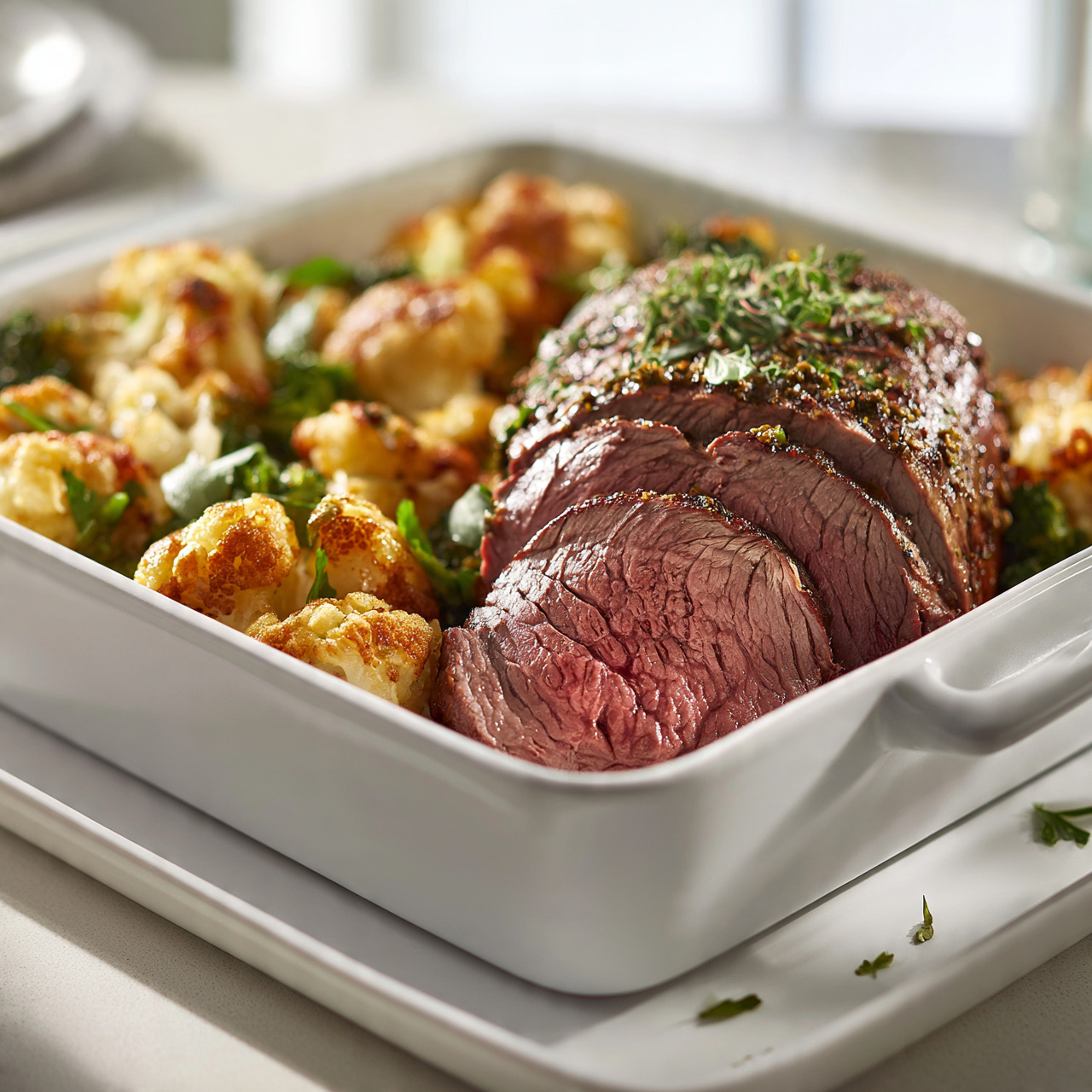
Best Ever Beef Tenderloin
This Best Ever Beef Tenderloin is seared in a cast iron skillet and finished in the oven for a perfectly juicy, restaurant-quality roast that is surprisingly easy to make at home.

The Only Beef Tenderloin Recipe You Will Ever Need
If there is one roast that earns a standing ovation at the dinner table every single time, it is a perfectly cooked beef tenderloin. This is the centerpiece dish for holidays, anniversaries, and any night you decide the people around your table deserve something truly special. And here is the secret most people do not realize: it is one of the easiest beef tenderloin recipes you can make in the oven. The cut does most of the work for you.
This recipe walks you through a cast iron sear followed by a quick oven finish, the same method used in steakhouses to lock in every drop of juice and build that deeply golden, herb-crusted exterior. The result is a roast that is tender enough to cut with a butter knife, infused with garlic and rosemary butter, and cooked to a rosy, blushing medium-rare from edge to edge.
Why This Method Produces the Best Beef Tenderloin
Beef tenderloin comes from the least-worked muscle on the entire animal, which is exactly why it is so tender and why it responds brilliantly to high, fast heat. The biggest mistake home cooks make is either skipping the sear or overcooking the roast in a low oven without ever developing a crust.
This recipe solves both problems. We start with a screaming-hot cast iron skillet to build a gorgeous mahogany crust on all four sides, then transfer the whole pan to a high oven to finish gently and evenly. The constant butter basting with smashed garlic and fresh herbs during the sear builds a layer of flavor that you simply cannot get any other way.
Chef's Tip: The single most important step in this entire recipe is letting the roast rest for at least 10 minutes after it comes out of the oven. Slicing too early sends all those beautiful juices straight to your cutting board instead of staying inside the meat.
Choosing and Prepping Your Tenderloin
For a juicy beef tenderloin recipe with consistent results, look for a center-cut tenderloin, sometimes labeled as a "Chateaubriand" at the butcher counter. This section has an even, cylindrical shape that cooks uniformly, unlike the tapered tail end.
Here is what to look for and how to prep it:
- Weight: A 3-pound roast comfortably feeds 6 people as a main course.
- Trimming: Ask your butcher to trim the silver skin, or do it yourself with a sharp boning knife. Silver skin does not break down during cooking and will make the roast tough in spots.
- Tying: If the roast has an uneven shape, tie it with kitchen twine every 1.5 inches to create a uniform cylinder. This ensures even cooking.
- Dry it thoroughly: Pat every surface bone-dry with paper towels before seasoning. Moisture is the enemy of a great crust.
Bringing the meat to room temperature for 45 minutes before cooking is not optional. A cold center means the outside overcooks before the inside reaches the right temperature.
The Right Tools Make a Real Difference
For a recipe this straightforward, the tools carry more weight than usual. A heavy cast iron skillet that can take serious stovetop heat and transfer directly into the oven is essential, and an accurate instant-read thermometer is the only way to guarantee you nail the internal temperature every time without guessing.
Building the Herb Butter Crust
The spice rub for this easy beef tenderloin is deliberately minimal: kosher salt, coarse black pepper, garlic powder, and a touch of smoked paprika. These four ingredients amplify the natural richness of the beef without competing with it.
The real magic happens in the skillet. Once the sear is done on all four sides, you add a generous knob of cold butter, five smashed garlic cloves, fresh rosemary, and thyme directly to the pan. As the butter foams and turns nutty, you tilt the pan and continuously spoon that herb-scented butter over the roast for a full minute. This is called basting, and it layers flavor directly into the crust in a way that a simple rub cannot achieve on its own.
Chef's Tip: Use cold butter, not room-temperature butter, when you add it to the skillet. Cold butter foams more vigorously, which means more surface contact with the herbs and more flavor transferred to the meat.
How to Cook Beef Tenderloin to the Perfect Temperature
The only reliable way to cook beef tenderloin is with a thermometer. Here are the target temperatures to pull the roast from the oven, keeping in mind that the internal temperature will rise another 3 to 5 degrees during resting:
- Rare: Pull at 120 degrees F
- Medium-Rare: Pull at 125 degrees F (recommended)
- Medium: Pull at 135 degrees F
- Medium-Well: Pull at 145 degrees F
For this particular cut, medium-rare is the sweet spot. Anything beyond medium starts to work against the tenderloin's natural texture and makes the meat noticeably firmer.
Ready to make it? Here is the full step-by-step recipe:
Best Ever Beef Tenderloin
This Best Ever Beef Tenderloin is seared in a cast iron skillet and finished in the oven for a perfectly juicy, restaurant-quality roast that is surprisingly easy to make at home.
Ingredients
- 3 lb beef tenderloin roast, center-cut, trimmed and tied
- 2 tsp kosher salt
- 1 1/2 tsp black pepper, coarsely ground
- 1 tsp garlic powder
- 1/2 tsp smoked paprika
- 2 tbsp olive oil, extra virgin
- 4 tbsp unsalted butter, divided
- 5 garlic cloves, smashed
- 3 fresh rosemary sprigs
- 4 fresh thyme sprigs
- 1 tbsp Dijon mustard, optional, for a subtle crust
Instruction
Remove the beef tenderloin from the refrigerator at least 45 minutes before cooking to bring it to room temperature. Pat it completely dry with paper towels.
Preheat your oven to 425 degrees F (220 degrees C).
In a small bowl, mix together the kosher salt, black pepper, garlic powder, and smoked paprika. Rub the olive oil all over the tenderloin, then press the seasoning blend firmly onto every surface. If using, brush a thin layer of Dijon mustard over the top before applying the spice rub.
Heat a large oven-safe cast iron skillet over high heat until it begins to smoke lightly. Add 2 tablespoons of the butter and swirl to coat.
Sear the tenderloin for 2 to 3 minutes per side, turning to brown all four sides evenly. This should take about 10 to 12 minutes total. Do not move the meat between turns.
Add the remaining 2 tablespoons of butter, the smashed garlic cloves, rosemary sprigs, and thyme sprigs to the skillet. As the butter melts, tilt the pan and use a large spoon to continuously baste the tenderloin with the herb butter for 1 minute.
Transfer the skillet directly to the preheated oven. Roast for 20 to 25 minutes, or until an instant-read thermometer inserted into the thickest part reads 125 degrees F (52 degrees C) for medium-rare, or 135 degrees F (57 degrees C) for medium.
Remove the skillet from the oven and transfer the tenderloin to a cutting board. Tent loosely with foil and let it rest for at least 10 minutes before slicing. This step is non-negotiable for a juicy result.
Slice into 1-inch medallions, spoon any pan juices over the top, and serve immediately.
Equipment
- Large cast iron skillet (12-inch recommended)
- Instant-read meat thermometer
- Cutting board
- Basting spoon
- Kitchen twine (if tying the roast yourself)
- Aluminum foil
Notes
Serving Suggestions and What to Pair With It
A roast this elegant deserves equally thoughtful sides. Here are some pairings that complement a simple cast iron beef tenderloin without overshadowing it:
- Creamy mashed potatoes or gratin dauphinois to soak up the pan juices
- Roasted asparagus or haricots verts for a clean, bright contrast
- A simple red wine pan sauce made by deglazing the cast iron with a splash of red wine and beef stock after the roast comes out
- Horseradish cream on the side for a sharp, cooling counterpoint to the richness of the beef
For wine, a bold Cabernet Sauvignon or a Bordeaux-style blend is the classic pairing. If you prefer something lighter, a Rhone-style Syrah works beautifully with the rosemary and herb notes in the crust.
Storing and Reheating Leftovers
Leftover tenderloin is genuinely one of the great kitchen gifts. Store slices in an airtight container in the refrigerator for up to 3 days. To reheat without turning the meat gray and dry, wrap slices loosely in foil and warm them in a 275 degree F oven for 10 to 15 minutes. Avoid the microwave entirely.
For a next-day lunch that borders on luxurious, serve cold slices on crusty bread with a smear of Dijon mustard and a handful of arugula. An easy beef tenderloin dinner on Sunday becomes an exceptional steak sandwich on Monday.