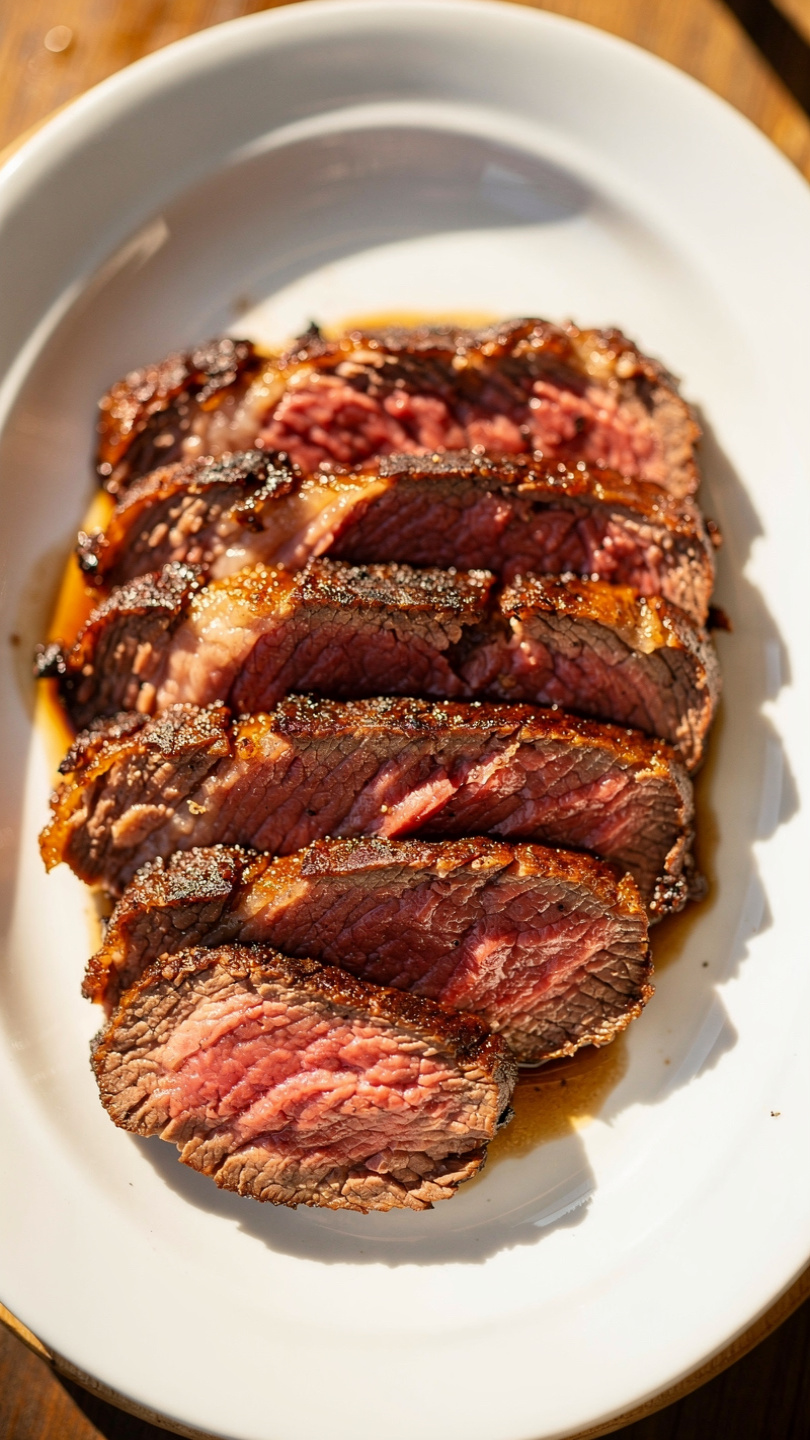
Perfect Roast Beef
Learn how to cook the perfect roast beef with a golden, herb-seasoned crust and a juicy, tender center every single time. This foolproof method delivers restaurant-quality results right from your home oven.
The Secret to a Truly Perfect Roast Beef
There are few things more satisfying at the dinner table than a beautifully carved roast beef with a herb-crusted exterior, blushing pink center, and a pool of rich pan drippings waiting to become gravy. It looks impressive. It smells incredible. And once you know the best way to cook roast beef, it is actually far simpler than it appears.
This recipe covers everything from how to season beef for roasting to exactly how long to cook it, and it works whether you are feeding a cozy Sunday family dinner or hosting a proper holiday spread.
Why the Right Tools and Cut Matter
Before we get into the method, it helps to talk about your setup. A reliable instant-read meat thermometer is the single most important piece of equipment you can own for roasting beef. Guessing by time alone is how roasts end up overcooked. A sturdy roasting pan with an elevated rack is equally critical, letting heat circulate underneath the meat for that evenly browned, beautifully caramelized crust.
For the best meat for roast beef, ribeye roast is the clear winner for flavor thanks to its natural marbling. Top sirloin is leaner but produces a wonderfully clean, beefy result. Both are excellent choices here.
Having the right gear in your kitchen takes the guesswork out of the equation and sets you up for success every time:
How to Season Beef for Roasting
Great roast beef starts with a bold, well-applied seasoning crust. The combination here is garlic, rosemary, thyme, smoked paprika, salt, and cracked black pepper, all brought together with olive oil into a thick, fragrant paste. Before applying it, brush the entire surface of the roast with a thin layer of Dijon mustard. This is the trick most home cooks skip, and it makes a real difference. The mustard helps the herb paste adhere to the meat, seals in moisture, and adds a subtle, almost undetectable depth to the crust once it is roasted.
Chef's Tip: Always pat your roast completely dry with paper towels before seasoning. Moisture on the surface creates steam in the oven, which works against developing that gorgeous, deeply browned crust.
Salt matters too. Kosher salt distributes more evenly than table salt and draws out just enough surface moisture before cooking to concentrate flavor beautifully.
The High-Heat Start Method
The technique that makes this recipe stand out is the high-heat start. The roast goes into a 450 degrees F oven for the first 15 minutes. This blast of heat creates a caramelized, herb-scented crust that locks in juices and adds incredible flavor. After those 15 minutes, the temperature drops to 325 degrees F for the remainder of the cook.
This approach answers one of the most common questions about how to roast beef perfectly: do you sear it on the stovetop first? With the high-heat oven method, the answer is no. You get all the benefits of searing without the splatter and the extra pan.
Understanding Internal Temperature
This is where your meat thermometer earns its keep. Here is a quick guide to doneness:
- Rare: 120 to 125 degrees F (bright red center)
- Medium-rare: 130 to 135 degrees F (warm pink center, the sweet spot for most cuts)
- Medium: 140 to 145 degrees F (slightly pink)
- Well done: 160 degrees F and above (no pink)
Pull the roast from the oven when it is 5 to 10 degrees below your target temperature. It will continue cooking as it rests.
Chef's Tip: Never skip the resting step. Tenting the roast loosely with foil and resting it for 15 to 20 minutes allows the juices to redistribute throughout the meat. Slice too early and those juices run straight onto your cutting board instead of staying in every bite.
What to Have With Roast Beef
Once you know how to cook a roast beef this well, the sides almost choose themselves. Classic pairings include:
- Creamy mashed potatoes to soak up the pan drippings gravy
- Roasted root vegetables such as carrots, parsnips, and potatoes cooked alongside the roast
- Yorkshire pudding if you are going the full British Sunday roast route
- Steamed green beans or roasted asparagus for something lighter and fresh
- Horseradish sauce or Dijon cream as a condiment for serving
The pan drippings left behind after roasting are liquid gold. A quick pan gravy made by whisking a little flour into the drippings and adding beef broth is one of the simplest and most rewarding sauces you will ever make.
Ready to bring this showstopper to your table? Here is the full step-by-step recipe:
Perfect Roast Beef
Learn how to cook the perfect roast beef with a golden, herb-seasoned crust and a juicy, tender center every single time. This foolproof method delivers restaurant-quality results right from your home oven.
Ingredients
- 3 lb beef ribeye roast or top sirloin roast, brought to room temperature for 1 hour before cooking
- 2 tbsp olive oil, extra virgin
- 4 garlic cloves, minced
- 2 tbsp fresh rosemary, finely chopped
- 1 tbsp fresh thyme, finely chopped
- 2 tsp kosher salt, or to taste
- 1 tsp black pepper, freshly cracked
- 1 tsp smoked paprika
- 1 tbsp Dijon mustard, helps the seasoning crust adhere
- 1/2 cups beef broth, for the roasting pan
- 2 tbsp unsalted butter, optional, for basting
Instruction
Remove the beef roast from the refrigerator at least 1 hour before cooking to allow it to come to room temperature. This ensures even cooking throughout.
Preheat your oven to 450 degrees F (230 degrees C).
In a small bowl, combine the olive oil, minced garlic, rosemary, thyme, smoked paprika, salt, and black pepper. Mix into a thick paste.
Pat the roast completely dry with paper towels. Brush the entire surface with Dijon mustard, then press the herb paste firmly all over the roast, coating every side generously.
Place the roast fat-side up on a rack set inside a roasting pan. Pour the beef broth into the bottom of the pan to prevent drippings from burning.
Roast at 450 degrees F (230 degrees C) for 15 minutes to develop a deep, golden-brown crust.
Reduce the oven temperature to 325 degrees F (165 degrees C) and continue roasting. For medium-rare, cook until the internal temperature reaches 130 degrees F (54 degrees C), roughly 60 to 75 minutes depending on the size of your roast.
Optional: Halfway through cooking, baste the roast with the pan drippings and a knob of butter for extra richness.
Remove the roast from the oven and tent it loosely with aluminum foil. Let it rest for at least 15 to 20 minutes before slicing. The internal temperature will rise another 5 to 10 degrees as it rests.
Slice against the grain and serve with the pan drippings or your favorite sides.
Equipment
- Roasting pan with rack
- Instant-read meat thermometer
- Aluminum foil
- Small mixing bowl
- Basting brush
- Sharp carving knife and cutting board
Notes
Storing and Making the Most of Leftovers
Leftover roast beef is one of life's genuine pleasures. Store slices in an airtight container in the refrigerator for up to 4 days. To reheat without drying out the meat, place slices in a covered dish with a splash of beef broth and warm gently at 275 degrees F in the oven.
Leftovers also open the door to some genuinely great meals:
- Roast beef sandwiches on crusty bread with horseradish and watercress
- Beef hash with potatoes and eggs for a weekend brunch
- Beef and vegetable soup using the bones or any remaining pan drippings as a base
Whether this is your first time attempting a roast or you are refining a technique you have made dozens of times, this recipe gives you everything you need to cook tender roast meat with confidence. Once you nail it, it becomes one of those dishes you look forward to making every single time the occasion calls for something truly special.