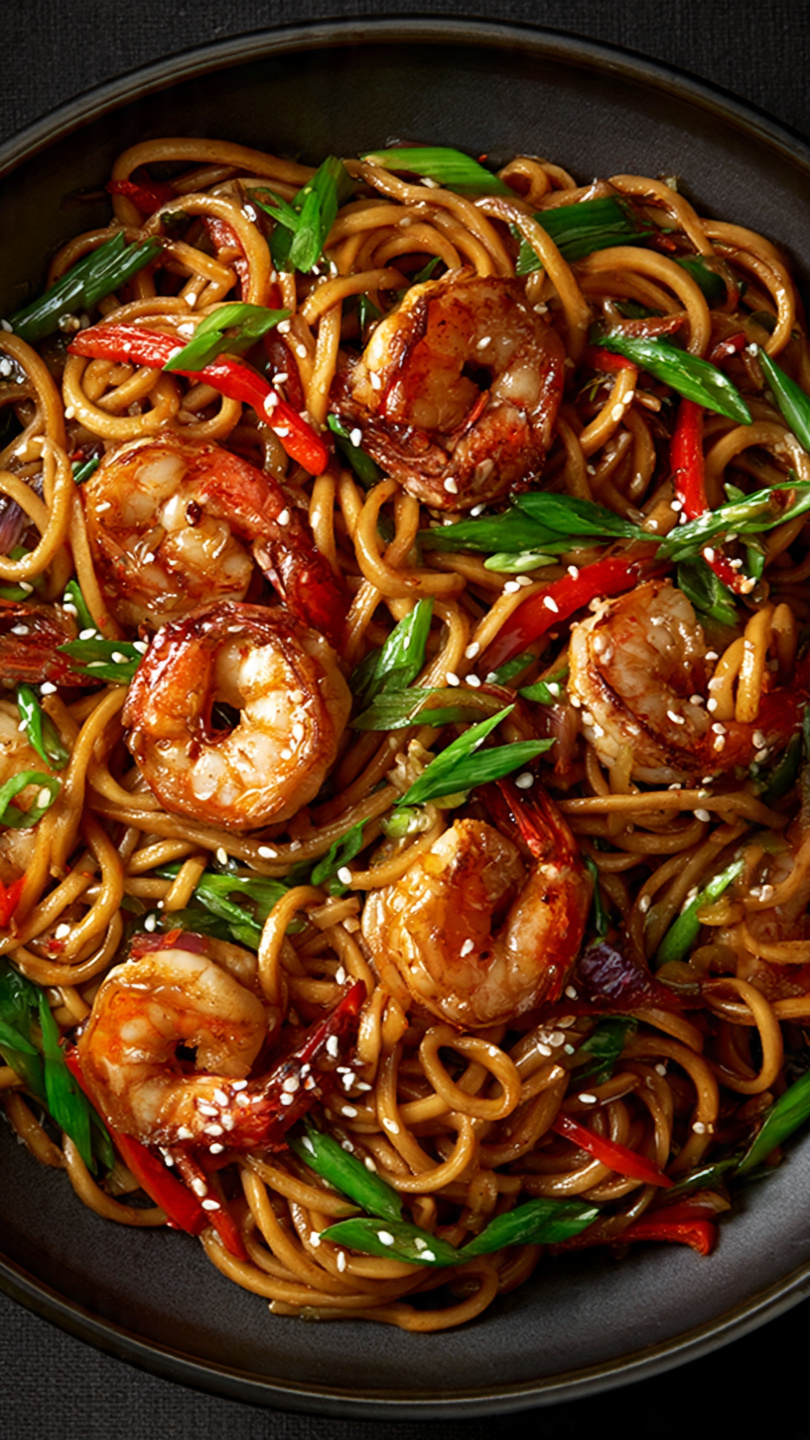
Shrimp Lo Mein
This Shrimp Lo Mein is loaded with juicy shrimp, crisp veggies, and glossy, savory noodles in a quick takeout-style sauce that beats delivery every time.

Why You Will Keep Making This Shrimp Lo Mein
There is a reason shrimp lo mein shows up on nearly every Chinese takeout menu in America. It hits every note you want from a weeknight dinner: tender noodles, juicy shrimp, crisp vegetables, and a glossy, savory sauce clinging to every strand. The best part is that this version comes together faster than delivery ever could, and you control exactly what goes into it.
If you have ever wondered how restaurants get that signature shine on their noodles, it comes down to a quick toss in a well seasoned sauce over high heat, not a deep fryer or a mystery ingredient. This is genuinely one of the easiest noodle recipes for shrimp you can learn, and once you get the rhythm down, you will find yourself making it for lunch, dinner, or anytime a noodle craving hits.
Before we get cooking, the right tools and ingredients make a real difference here. A properly seasoned wok or a wide, heavy skillet helps you get that high heat sear on the shrimp and keeps the noodles from clumping, and good quality soy sauce and oyster sauce are what really separate homemade lo mein from a flat, watery imitation. These are the products that genuinely help this recipe shine:
What Makes Lo Mein Different From Chow Mein
If you have ever stood in the noodle aisle wondering whether to grab lo mein or chow mein noodles, you are not alone. The names get used interchangeably on a lot of takeout menus, but there is a real difference. Lo mein uses a thick, round noodle that gets boiled first and then tossed with sauce, giving you a soft, chewy bite. Chow mein noodles are typically thinner and get pan fried until some edges turn crispy.
This recipe leans into the lo mein style on purpose. The thick noodles hold onto the sauce beautifully and give you that satisfying, slurpable texture that makes this dish so comforting. If you only have thin noodles on hand, you can still make it work, just know the texture will lean more toward a shrimp chow mein than a classic Cantonese lo mein recipe.
Chef's Tip: Rinse your cooked noodles briefly under cold water and toss them with a touch of oil right after draining. This stops them from overcooking and keeps them from turning into one giant noodle brick while you prep everything else.
Building Flavor Layer by Layer
Great lo mein is really about sequencing, not complicated technique. You want the shrimp seared hot and fast so they stay tender, the aromatics bloomed just long enough to perfume the oil, and the vegetables cooked quickly so they keep their crunch. Everything gets reunited at the end with the noodles and sauce for one final toss that brings it all together.
A few ingredient notes worth knowing:
- Dark soy sauce is optional but it is the secret behind that deep mahogany color you see in restaurant lo mein. Regular soy sauce alone will taste great but look paler.
- Napa cabbage adds a gentle sweetness and stays crisp tender, making it one of the better vegetables for this style of dish compared to heartier greens.
- Bean sprouts should go in near the end since they cook in under a minute and turn mushy if added too early.
This formula is flexible too. Swap in snap peas, sliced mushrooms, or baby corn if that is what is in your fridge, the technique stays exactly the same no matter which vegetables you choose.
Ready to make it? Here is the full step-by-step recipe:
Shrimp Lo Mein
This Shrimp Lo Mein is loaded with juicy shrimp, crisp veggies, and glossy, savory noodles in a quick takeout-style sauce that beats delivery every time.
Ingredients
- 12 oz lo mein noodles, or thick fresh egg noodles
- 1 lb large shrimp, peeled and deveined
- 3 tbsp soy sauce, low sodium preferred
- 2 tbsp oyster sauce
- 1 tbsp dark soy sauce, for color, optional
- 1 tsp sesame oil, toasted
- 1 tsp sugar
- 3 tbsp vegetable oil, divided, for stir-frying
- 3 garlic cloves, minced
- 1 tbsp fresh ginger, minced
- 1 carrot, julienned
- 2 cups napa cabbage, shredded
- 1 bell pepper, thinly sliced
- 1 cup bean sprouts
- 3 green onions, cut into 2-inch pieces
Instruction
Bring a large pot of water to a boil and cook the lo mein noodles according to package directions until just tender. Drain, rinse briefly under cold water to stop the cooking, and toss with a small drizzle of oil so they do not stick together.
In a small bowl, whisk together the soy sauce, oyster sauce, dark soy sauce, sesame oil, and sugar. Set this sauce aside.
Pat the shrimp dry with paper towels and season lightly with a pinch of salt and pepper.
Heat 1 tablespoon of vegetable oil in a large wok or skillet over high heat until shimmering. Add the shrimp in a single layer and sear for about 90 seconds per side until just pink and curled. Remove to a plate.
Add the remaining 2 tablespoons of oil to the same wok. Add the garlic and ginger and stir-fry for 15 seconds until fragrant but not browned.
Add the carrot and bell pepper and stir-fry for 1 to 2 minutes until just starting to soften.
Add the napa cabbage and bean sprouts and stir-fry for another minute until the cabbage wilts slightly but still has crunch.
Return the shrimp to the wok along with the cooked noodles and green onions.
Pour the sauce over everything and toss vigorously with tongs for 1 to 2 minutes, making sure every strand of noodle gets coated and everything is heated through.
Taste and adjust with a splash more soy sauce if needed, then serve immediately while hot.
Equipment
- Large wok or skillet
- Tongs
- Large pot for boiling noodles
- Small mixing bowl
Notes
Serving, Storing, and Make It Your Own
Shrimp lo mein is a complete meal on its own, but it is also fantastic alongside other dishes to cook for dinner when you want a noodle option on a bigger spread, think alongside dumplings, egg rolls, or a simple hot and sour soup. It also happens to be one of those fun recipes for lunch that reheats decently and travels well in a lunchbox.
If shrimp is not your thing, this base sauce and technique works just as well with crab meat lo mein, thin sliced beef, or even a vegetarian version loaded with extra mushrooms and tofu. For a noodle swap, thinner noodles will give you something closer to shrimp chow main, while sturdier, thick noodle varieties keep you firmly in lo mein territory.
Chef's Tip: If your finished dish looks a little dry, do not add more soy sauce right away. Instead, splash in a tablespoon or two of the noodle cooking water. The residual starch helps the sauce cling to every strand without making the dish overly salty.
However you serve it, this is the kind of yummy lunch food and easy dinner recipe that earns a permanent spot in your weekly rotation.